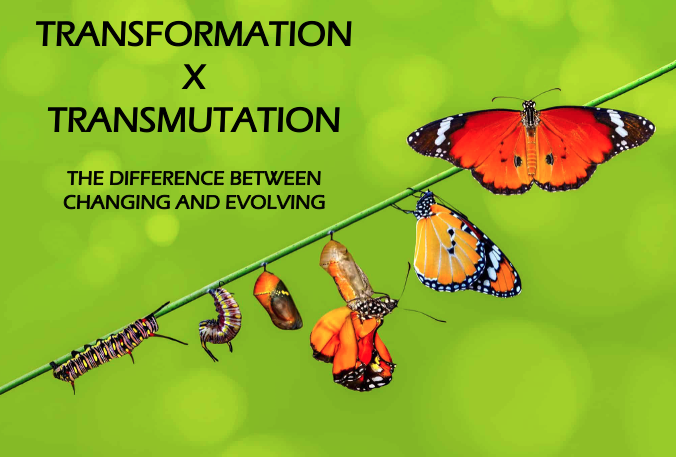
Transformation vs. Transmutation: the two paths of organizational change
In the corporate world, everyone talks about organizational change. But few leaders recognize that change has two distinct dimensions: transformation and transmutation. Both matter, yet they operate at very different depths.
Organizational transformation: whether digital, agile, operational, or structural—updates tools, systems, methods, and the way work is executed. It’s visible, practical, often fast to implement. In essence, it changes how the organization operates.
Organizational transmutation, however, goes deeper. It reshapes values, culture, management philosophy, identity, and the underlying consciousness that guides decisions. It doesn’t just alter routines; it reframes meaning. It doesn’t simply change behavior; it changes understanding.
“Transformation improves performance. Transmutation elevates purpose”.
This distinction matters because every organizational change operates on these two planes: the external and the internal. Any initiative, from modernizing processes to redefining strategy, can transform or transmute depending on the level of depth the organization is willing to embrace.
And this principle isn’t limited to companies. It applies to people as well. Changing clothes, buying a new car, redesigning a room – these are transformations. They shift the appearance, the environment, the immediate feeling. But they don’t necessarily change the person underneath. Someone may look happier, but without internal change, no outfit or new object will create genuine happiness.
Organizations behave the same way. They adopt new technologies, implement agile frameworks, or restructure teams, and results improve for a while. But if the mindset, principles, and culture remain unchanged, the company inevitably returns to old patterns.
When only the “how” changes, but the “why” and “from where” remain the same, the change collapses back on itself.
In a world where tools can be copied and methodologies spread overnight, true competitive advantage comes from internal maturity – from the ability to transmute. Organizations that achieve transmutation don’t just respond to the world; they reinterpret it. And by reinterpreting it, they create value in ways that others cannot replicate.
That’s why the key question is not only “What do we need to transform?” but, more importantly:
“Who must we become for any transformation to be real and lasting?”
Transformation adjusts the system. Transmutation reshapes the essence. And changes of essence never go backward.